-
- - - -
BIOGRAPHIES - - -
- Henry
Wentz
-
-
- Back on the Boulevard,
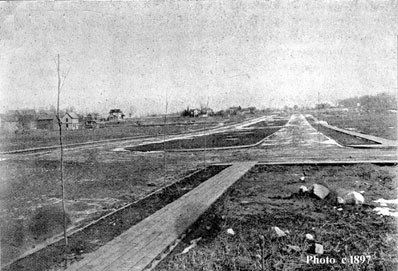
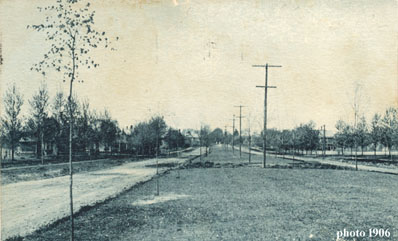
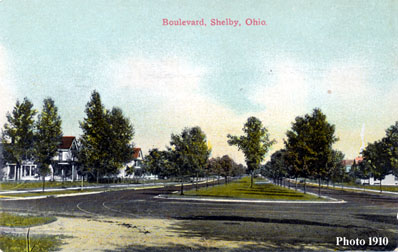
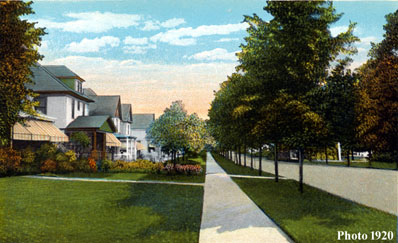
“We laid it out as the Boulevard Addition to Shelby with
the idea of building one of the best residential districts in
Shelby and I believe we have succeeded, at least I’m not
ashamed of our adventure, but feel proud of it.” Henry said,
“A few citizens rather made fun of the name Boulevard Addition.
We have lived to vindicate the name. A great number of our best
citizens and residences are now on the Boulevard.”
These photos show the rapid development of the Shelby Boulevard.
 |
 |
 |
 |
-
- Henry joined an
extensive list of lodges and had many military affiliations and
events throughout his life. He lists them in his book: “
Was charter member of Harker Post # 146 G.A.R organized Sept
28th, 1881 and its Post Commander for about 12 years at different
times, and also acted as adjunct for many years. Was delegate
to state encampments and delegate to the National Encampment
at Indianapolis, Indiana in 1894 and at Boston, Massachusetts
in 1917. Always took a prominent part in it’s affairs and
always remained in good standing. Was a charter member in the
K. of P. Subordinate Lodge # 392 and passed through all the chairs
of this lodge. Was also a charter member of Damon Company, Uniform
Rank # 104. Was 1st Lieutenant for several years and Captain
Major, Lieutenant Colonel of the 9th Regiment of the Uniform
Rank, and afterwards by appointment of Brigadier General Kaughman
commanding Ohio brigade, Commissary General of Substance , with
rank of General on my staff.”
-
- In the realm of
Shelby politics, with his term ending as Shelby Councilman in
1908, Henry’s friends encouraged him to run for Mayor of
Shelby. Henry recalls, “I did not want the office as it
wasn’t to my liking. In this case, I was badly defeated,
in fact, the whole Republican ticket went down to defeat. In
one sense, I was glad that I did not get the office, but of course
did not relish the idea of so many of my friends going back on
me. Have, however, been told many times since that it was not
me that the people were after, but a certain “gang”
as they called it. Let that be as it may, I wish to say that
there was no bunch of men who did as much for Shelby and its
upbuilding as that same “gang” as they were called,
and I have always felt proud of the fact that I was connected
with them in nearly all their work. They were largely responsible
for bringing the following manufacturing plants to Shelby: The
Shelby Incandescent Lamp Company, The Shelby Printing Company,
The Auto-Call Company and helped materially in the first Tube
Company and I am free to say that if it had not been for them,
the present Ohio Seamless Tube Company would not now be here.
They also aided in every other enterprise that worked for the
betterment of Shelby. The parties who criticized them and found
fault cannot equal the work for Shelby they did.”
-
- He continues,
" I have been connected with nearly all the Shelby enterprises-
in some I made money, in others I lost, but when I lost I took
it as a matter of course and never worried about my bad luck.
I have always tried to do my duty in any public enterprise. In
just a few days over a month I will be eighty-three years old.
I have never been out of employment long. When out, took the
first thing that came along and was thankful for even that. I
have much to be thankful for. "
In 1911, just as Henry began purchase of the Citizens Bank building
at 20 West Main Street in Shelby, Mr. G. M. Skiles became a member
of the board of directors of the Plate Glass Association and
together, they proudly moved in, on the ground floor. This bank
building was the third location for the insurance company.
In November, 1918, the Plate Glass Association was reorganized
into a company named The Mutual Plate Glass Insurance Company
of Shelby, Ohio.
In 1920, Henry, along with 7 employees, did business in Ohio,
Pennsylvania, Maryland, and District of Columbia. He states their
insurance premiums (income) for 1920 were $118,000 and insurance
claims (losses) were $55,000 for the year. A nice net surplus!
At its annual meeting of policy holders on Jan. 17, 1922, the
Daily Globe reported, “The yearly session was one of the
best from every point of view ever held by the company. The annual
reports by the officers were astonishing and hardly believable,
as they showed that the volume of business had grown far beyond
anything the organizers of the company had ever dreamed. The
business has been honestly and efficiently conducted and for
this reason the Shelby company was able to meet the competition
of 32 other companies successfully.”
The report continues, “This certainly speaks well for the
management of the Shelby company. Quite contrary to most business
organizations, most of which are at the time standing still or
going backward, the Shelby Mutual Plate Glass Company is forging
ahead. One of the policy holders after the meeting remarked that
someone was on the job.”
“The Alfred M. Bests insurance reports, which are considered
the highest authority on insurance, say of the Shelby company.
'They make their own rates based on their many years of experience,
and have never made an additional assessment.' The general public
does not appreciate the above citation but the insurance world
considers it the highest tribute it can get. The slogan over
in Pennsylvania when speaking of plate glass insurance to a prospect,
“The Shelby” is all that is necessary and many people
in that state think Shelby is a whale of a city.”
-
- "The company
has grown from nothing to gigantic proportions. In 1914, it was
the only plate glass insurance company in Ohio. It insures plate
glass against breakage by accident, except by fire. It also protects
its patrons against loss by flood. Policies last 10 years with
privilege to cancel at any time by either party. For many years
its growth was very slow but the increasing volume of business
has been remarkable in the past few years." (The Daily Globe,
Shelby)
In 1922, Henry was the company President, Treasurer, and Board
Director. R. C. Skiles was Vice President, L. A. Dennis was Secretary
and general agent, and J. J. Crum was Assistant Secretary and
Assistant Treasurer. Later that year, the business had purchased
property for a fourth new location at 23 West Main Street. The
firm paid $5,100 for the site, and long range plans called for
the completion of the new building by 1930 to coincide with the
50th anniversary of the company.
The Great Depression had little effect on the company as it celebrated
its first 50 years of operation in 1930. By 1929, it was operating
in 18 states with net premiums of $512,000. (The Daily Globe,
Shelby)
-
-
- Page 3
-
- Next
-
-
-
- If you would like
to add to, or comment on, this biography, please email us,


Copyright
© 2000, 2027