|
|
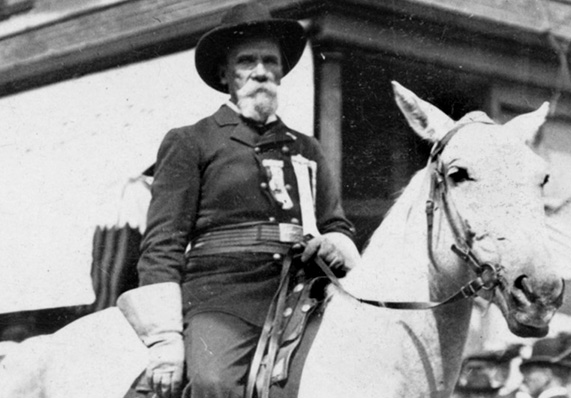
Henry, along with his siblings, spoke only Pennsylvania Dutch and couldn’t understand English until they started school at age 4 but even then, they preferred Dutch. In his autobiography titled "The Autobiography of a Soldier Boy and Businessman"(written in 1924), Henry recollects, “ The late John F. Sheely was my chum. He could not talk Dutch and I could not talk English- how we managed to get on I could not tell. John asked his mother one day why it was that when Henry talked he could not understand him, but when he laughed, Henry laughed the same as he did.”
Henry spoke highly of his parents in his book. “My mother doctored the family for all the ordinary ailments. She gathered roots and herbs, dried them and made tea for the remedies. A doctor was never sent for except in very serious cases. She was a good mother and strove diligently to rear her family in the ways of God. My father made his own farm implements, such as wooden forks, hay rakes, harrows and etc. In the early days, he made our bedsteads by boring holes in the logs in the wall (it was a log cabin) to insert the rails in the holes and the rear legs were driven into the ground. For a number of years before his death he was a gunsmith.”
An addition was built onto the log cabin, making it a homestead and Henry helped his father on their farm until he was 18 and old enough to begin an apprenticeship. William A. Stine owned a carpentry business in Crestline and happened to be married to Henry’s sister Hannah, so agreed to give Henry a 3 year apprenticeship. The apprenticeship lasted 9 months per year so Henry could go to school the remaining 3 months. He was paid $27 each year and free board. On April 1st, 1861 Henry completed his apprenticeship and set out into the world with a small tool chest he prepared during the winter, along with $100 his father gave him and a new outfit they bought together in Galion. He tried to get a job in Van Wert, Ohio but no luck so he went to Fort Wayne, Indiana and found work building freight cars 10 hours a day for $1.50 at Pennsylvania Railway Company.
Just 12 days after Henry completed his apprenticeship and had hardly started his new job, President Lincoln called for 75,000 new volunteers (3 month term) to fight against the southern soldiers in the Civil War. Henry tried to get someone he knew to enlist with him and even wrote letters back to Shelby but no one responded. He attempted to sign up with two different regiments but no luck. Three months later, July 6th, he saw a flyer on the bulletin board calling for recruitments and to meet Captain D. W. C. Rugg at the Evelyn Hotel; he did and was the first person to sign the list for the 11th Indiana Volunteer Infantry. Captain Rugg asked him when he's available and he said now- he went home, packed his tool chest and belongings, and mailed them back to Shelby. (This is how his family found out he enlisted.)
The next day he rode with Captain Rugg in a buggy to Decatur, Indiana where 33 men signed up. Captain Rugg asked Henry to return the horse and buggy to Fort Wayne and find hotels for the 33 men. Henry returned but couldn’t get any hotels to agree to house the men. Captain Rugg arrived with the men and upon hearing no lodging, went straight to the same hotels himself and instantly got rooms. Henry wrote in his autobiography, “ I came to the conclusion that an officer in the U. S. uniform, wearing a sword, could do more than a green boy like myself in securing quarters for his men.”
There were 17 men from Spencerville who came to Fort Wayne wanting to enlist and joined the company with Henry. Amongst them was J. D. Leichty, who became one of his best friends and would later partner with Henry in Shelby along with Francis Brucker, to create and build the homes on the Boulevard.
Captain Rugg trained Henry and the men on the streets of Fort Wayne for about 10 days. Then orders came to go to camp in Indianapolis in an old brick foundry building and then to Camp Morton; also in Indianapolis, at an old fairgrounds, sleeping in the horse and cattle stalls. They remained here until August 31st when they were completely mustered into the service. In his autobiography, Henry writes, “ I never was examined for my physical fitness for the service. At the mustering in, the mustering officer Lt. Col. T. J. Wood looked me over and chucked me in the chest with his fist, remarking as he noticed the stroke did not affect me, 'I guess you’ll do.' That was my examination.”
|
|
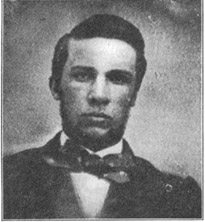
Henry and the men in the 11th Indiana Volunteer Infantry were ordered to Benton Barracks, St. Louis, Missouri and travelled by train, then steamer. Then from St. Louis to Paducah, Kentucky where they had winter quarters until February 5, 1862. Henry writes, “ During our stay at Paducah, there was a certain Col. Wolford who lived in Paducah and acted as scout and spy for Gen. Smith, who was the commander for this post. Col. Wolford passed our pickets with a pass from Gen. Smith but some of the boys did not like him and suspicioned his loyalty. One day when I was on duty as a corporal of the camp guard with instructions to let no one pass the guard line without a pass, I was surprised to see nearly the whole regiment rush across the line, going toward Col. Wolford’s residence, where we noticed a rebel flag floating in the breeze. The house was not over 100 yards from our camp. In a very few minutes the flag came down. The whole square was filled with soldiers. It seems the women of the Wolford family were rebels and had the flag raised. Gen. Smith sent for General Wallace and undertook to reprimand him for the conduct of his brigade. Gen. Wallace told him his men had come down south to fight rebels, and would fight them wherever found, even if they were in his headquarters. What became of Col. Wolford, the scout, I do not know- I never heard of him afterward.”
On his 22nd birthday, Dec. 9, 1861, Henry was promoted from 3rd Corporal to Sergeant to fill a vacancy caused by death. He writes, “About December 1st, Third Sergeant Karnes was killed while helping to mount a big gun at the fort. By accident the gun slipped and fell on him, killing him almost instantly. An unpleasant way to get a promotion.”
Later that winter, Henry wrote to his father. “We expected to attack the enemy during this campaign and I was concerned about my part in the battle- that is, I wondered whether I could muster up courage enough to do my duty. When the fight came on and the bullets began to fly I had my doubts, always being of a peaceful disposition- but I soon found that I could face the music. The time it tries your nerves is when you’re in a position of expectancy, awaiting the actual battle, or rather when you’re in line, with the bullets and shells falling around you and your position prevents you from taking part - that makes the cold chills run over you. When you are actually engaged and can return the fire, that feeling of dread passes away- so I found it through all my service and I thank God that it was so.”
In the spring, Henry was in an extremely deadly battle at Hinds County, Mississippi called “ Champion Hill” on May 16, 1862, led by Gen. Ulysses Grant. The battle lasted about 4 hours, during which Henry writes, “Colonel Macauley and I found ourselves between our regiment and the enemy. I never was anywhere where the bullets flew as fast as they did there. It was zip, zip all around us. They hit the Colonel in the hip. I escaped with the heel knocked off one of my boots and a ball through the top of my cap. I was going up the hill following the regiment and had just raised my heel from the ground in making a step, when they hit my boot heel. If the heel had been in the ground, it would have hit me in the heel, so if I had not commenced the step, I would have been wounded in the heel and if I had finished the step it would have raised me high enough on the side of the hill to have another hit me in the head. Too close for comfort.” Henry reports the total loss of killed and wounded Union men at Champion Hill was 2,254. His regiment, the 11th Indiana, lost killed and wounded 187 out of 490. His company went into the fight with 43 men and lost 28.
In Dec. 1864, after fighting in a battle at Cedar Creek, part of what was called the Shenandoah Valley Campaign, Henry was chosen to travel to Washington D.C. He writes, “ The instructions given me were to take charge of a detail of a Corporal, Sergeant and five men to take the Division baggage to Washington D.C. and place it in storage.” While in Washington, Henry met President Lincoln. “While on the veranda, the president came out, shook us all by the hand and inquired where we were from and what regiment we belonged to etc. He then bid us goodbye and wished us success and went back into the house.” Henry writes, “This was the only time I ever saw Mr. Lincoln.”
In the end, Henry said, “While we had many hard times, we had many enjoyable days during our service in the war. Some times while marching through mud and rain until we were almost ready to lay down anywhere, someone would start to sing John Brown etc, or tell some story or imitate a chicken squawking, a pig squealing or a dog yelping and soon had everybody laughing and forgot all about being tired and worn out. One boy would jump up, crack his heels together and crow like a rooster.”
Descendants of Johan Heinrich Wentz Generation No. 1 1. JOHAN HEINRICH WENTZ was born 05 Mar 1766 in York Co., Pa., and died 23 Feb 1852 in Blain, Perry Co., Pa. bur Zion Lutheran & Reformed, Blain, Perry Co., Pa.. He married CATHARINA JACOBS Abt. 1790 in York Co., Pa.. She was born 19 Oct 1764 in Adams Co., PA., and died 19 Mar 1854 in Perry Co., Pa. bur Zion Lutheran & Reformed, Blain, Perry Co., Pa..
Children of JOHAN WENTZ and CATHARINA JACOBS are:
i. ANNA MARIA2 WENTZ, b. 06 May 1790, York Co., Pa.; d. 10 Jan 1791, York Co., Pa..
ii. CATHERINE WENTZ, b. 25 Oct 1791, York Co., Pa.; d. Abt. 1800, York Co., Pa..
2. iii. DANIEL WENTZ, b. 11 Feb 1794, York Co., Pa.; d. 05 Aug 1849, Perry Co., Pa..
iv. SUSANNA WENTZ, b. 15 Apr 1796, York Co., Pa.; d. Abt. 1825, Perry Co., Pa..
3. v. JACOB WENTZ, b. 06 May 1798, York Co., Pa.; d. 17 Oct 1873, Perry Co., Pa..
4. vi. HENRY HEINRICH WENTZ, b. 01 Jun 1801, Dover Twp., York Co., Pa.; d. 01 Apr 1880, Cass Twp., Richland Co., Ohio.5.
vii. PETER WENTZ, b. 06 Sep 1804, Dover, York Co., Pa.; d. 06 Jul 1828, Perry Co., Pa. bur Zion Lutheran & Reformed, Blain, Perry Co., Pa..
viii. GEORGE WENTZ, b. 31 Mar 1808, York Co., Pa.; d. 12 Apr 1893, Perry Co., Pa. bur Zion Lutheran & Reformed, Blain, Perry Co., Pa.; m. ANNA LEISENRING, b. Abt. 1804, Perry, Co., Pa.; d. Bet. 1850 - 1870.
Generation No. 2 4. HENRY HEINRICH WENTZ was born 01 Jun 1801 in Dover Twp., York Co., Pa., and died 01 Apr 1880 in Cass Twp., Richland Co., Ohio. He married ELIZABETH SCHEIBLY 04 Nov 1822 in Landisburg, Perry Co., Pa., daughter of SOLOMON SHEIBLEY and ELIZABETH BOWER. She was born 24 Feb 1803 in Perry Co., Pa., and died 22 Feb 1890 in Shelby, Richland Co., Ohio.
Children of HENRY WENTZ and ELIZABETH SCHEIBLY are:
6. i. MARY W. WENTZ, b. 23 May 1824, Perry Co., PA.; d. 24 Apr 1903, Richland Co., Ohio.
7. ii. HANNAH CATHERINE WENTZ, b. 25 Dec 1826, Perry Co., PA.; d. 21 Jun 1901, Lexington, Richland Co., Ohio - bur East Crestline, Greenlawn Cem..
8. iii. JOHN WENTZ, b. 11 Nov 1828, Perry Co., PA.; d. 01 Jun 1911, Shelby, Ohio - buried Oakland Cem..
9. iv. DAVID WENTZ, b. 06 Jun 1830, Perry Co., PA.; d. 03 Dec 1905, Jackson Twp., Richland Co., Ohio - Bur London Cem.
10. v. LYDIA ANN WENTZ, b. 13 Jan 1832, Cass Twp., Richland Co., Ohio; d. 12 Oct 1889, Cass Twp., Richland Co., Ohio.
11. vi. GEORGE WENTZ, b. 03 Jul 1834, Cass Twp., Richland Co., Ohio; d. Abt. 1888, Missouri City, Fort Bend, TX..
vii. ELIZABETH WENTZ, b. 11 Oct 1837, Cass Twp., Richland Co., Ohio; d. 11 Oct 1921, Shelby, Ohio - bur London Cem..
12. viii. HENRY WENTZ, b. 09 Dec 1839, Cass Twp., Richland Co., Ohio; d. 12 Apr 1928, Sharon Twp., Richland Co., Ohio - bur Oakland Cem. (Mausoleom).
13. ix. SARAH ANN WENTZ, b. 09 Sep 1843, Cass Twp., Richland Co., Ohio; d. 01 Jan 1891, Shelby, Ohio - bur Oakland Cem..
14. x. LEVI SHEIBLY WENTZ, b. 08 Sep 1845, Cass Twp., Richland Co., Ohio; d. 16 Mar 1922, Richland Co., Ohio - London Cem..
xi. PRISCILLA CATHERINE WENTZ, b. 13 Nov 1847, Cass Twp., Richland Co., Ohio; d. 30 Oct 1936, Richland Co., Ohio; m. DANIEL S. STROUP, 27 Sep 1877, Richland Co., Ohio.
Generation No. 3 12. HENRY WENTZ was born 09 Dec 1839 in Cass Twp., Richland Co., Ohio, and died 12 Apr 1928 in Sharon Twp., Richland Co., Ohio - bur Oakland Cem. (Mausoleom). He married SARAH A. BUSHEY 08 Jun 1865 in Richland Co., Ohio, daughter of ABRAHAM BUSHEY and BARBARA FIREOVED. She was born 14 Nov 1841 in Richland Co., Ohio, and died 29 May 1907 in Sharon Twp., Richland Co., Ohio - bur Oakland Cem (Mausoleom)..
Children of HENRY WENTZ and SARAH BUSHEY are:
i. HENRY RUCKLES4 WENTZ, b. 21 Mar 1867, Sharon Twp., Richland Co., Ohio; d. 19 Nov 1877, Sharon Twp., Richland Co., Ohio - bur Oakland Cem..
ii. ESTELLA BLANCHE WENTZ, b. 04 Oct 1869, Sharon Twp., Richland Co., Ohio; d. 11 May 1947, Mansfield, Ohio - bur Oakland Cem. (Mausoleom); m. DANIEL V. SUMMERS, 07 Jun 1894, Richland Co., Ohio; b. 12 Feb 1863, Shelby, Ohio; d. 30 Nov 1917, Shelby, Ohio - bur Oakland Cem. (Mausoleom).
iii. GEORGE RALPH WENTZ, b. 01 Mar 1879, Sharon Twp., Richland Co., Ohio; d. 01 Aug 1886, Sharon Twp., Richland Co., Ohio - bur Oakland Cem..


Copyright © 2000, 2027